Beards do not go wrong all at once. In Harrisburg chairs, the pattern is consistent: the neckline softens first, then strays appear above the cheek line, then the mustache starts touching the lip, while the body of the beard still looks fine. Men who trim everything every time they notice one of those signs end up slowly shrinking the beard. Men who never touch it arrive looking overgrown by week three. The middle path is a cadence: the right small job at the right interval.
Start from the symptom in front of you, match it to its timing, and do only that job.
How fast a beard actually grows
Beard hair grows at roughly the same rate as scalp hair, about half an inch a month, though it varies by man and by area of the face. The chin often grows faster and longer than the cheeks, which is why an untrimmed beard gradually points. Because the total terminal length of beard hair is much longer than most men wear it, a beard is always in active growth, and shape is entirely a trimming decision.
The cadence, step by step
- Days 1 to 7 after a barber trim: do nothing but wash and oil lightly. The lines are fresh; any home pass this week only risks them.
- Week 2, the neckline check: look under the jaw. The fix is the two-finger rule: two fingers above the Adam's apple marks the boundary. Clear growth below that line only.
- Week 2, cheek strays: remove only the isolated hairs clearly above the natural cheek line. Do not lower or reshape the line itself at home.
- Week 3, the mustache: trim hairs that hang over the upper lip line, cutting conservatively across, a little at a time. Mustache bulk comes back slowly, so short passes matter.
- Week 3, surface flyaways: comb the beard down, then against the grain, and snip only the tips that escape the main mass. Never cut into the body to chase fullness problems.
- Week 4, the decision point: if the profile shows a shelf, the chin has outgrown the cheeks noticeably, or the lines you set at home have drifted, the beard needs a barber shaping, not another home session.
Where home trimming goes wrong
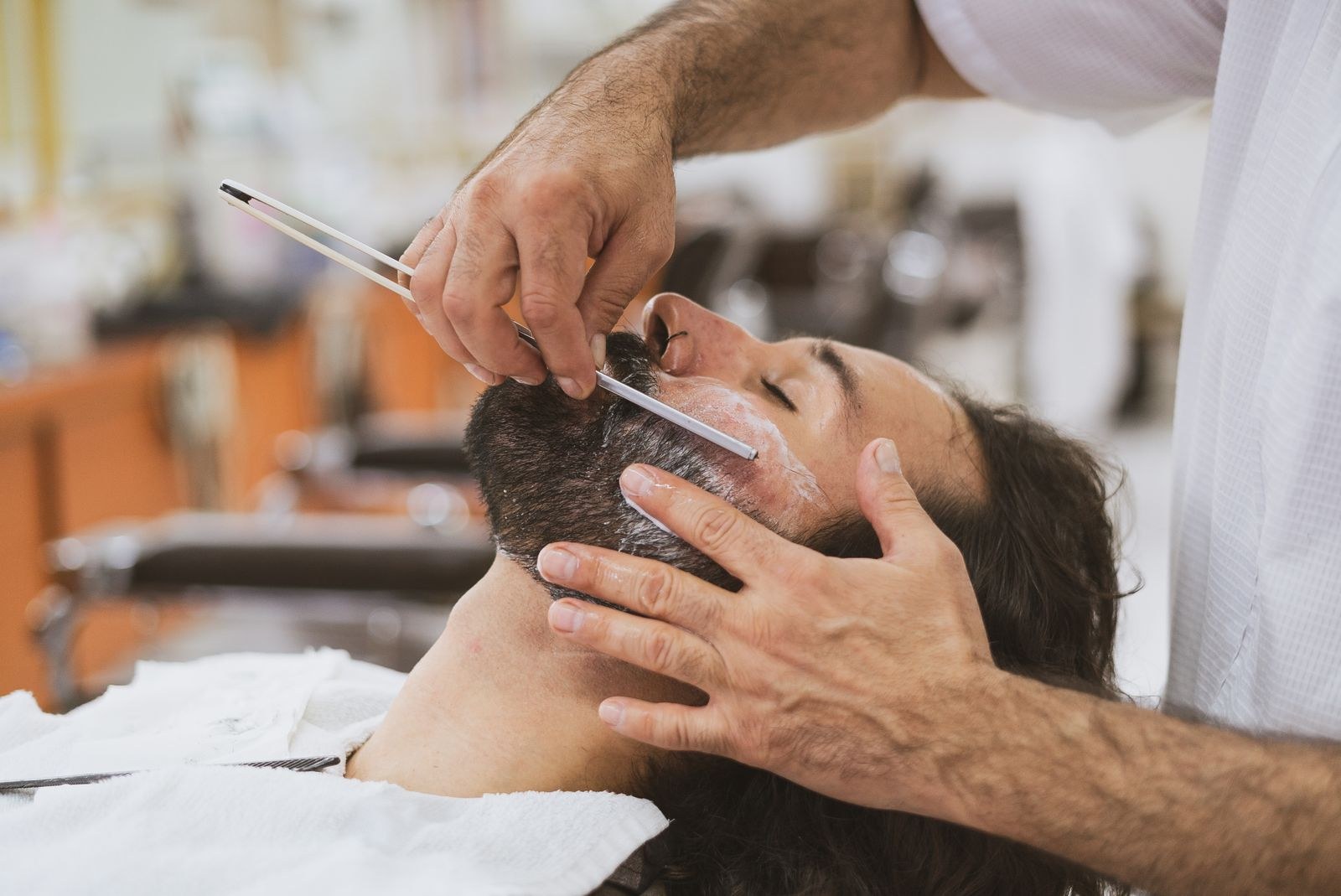
Three errors account for most beard repairs. The first is the rising neckline: each session takes a little above the true line, and within two months the beard ends under the chin instead of below the jaw, which makes it look thin from the front. The second is matching cheeks by memory, which produces a slow drift until one side sits visibly higher. Alternate tiny passes and step back often. The third is trimming wet. A wet beard hangs longer, so a wet trim removes length you wanted, and the mistake only shows when it dries.
If any of those has already happened, stop trimming the affected boundary entirely and let it grow for a few weeks. Barbers at Azeal Barber Shop Of Harrisburg can reset a line that has hair to work with; a line trimmed into the beard's body takes much longer to restore.
Products and heat, kept simple
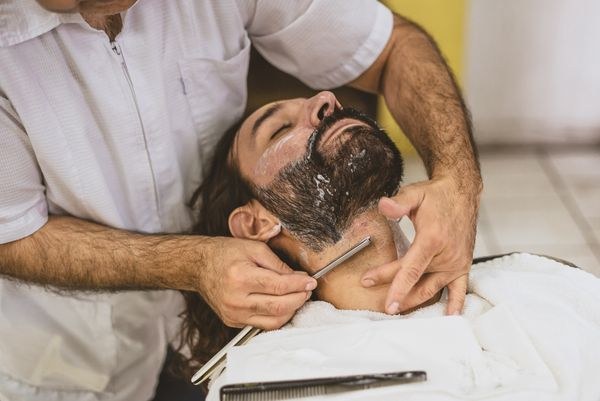
Beard oil softens coarse hair and reduces itch, applied sparingly to a damp beard. Balms add a little hold for shaping. Heat from a dryer on a low setting, brushed downward, can straighten a wavy beard for the day, but daily high heat dries the hair and skin. None of these extend the trim interval; they keep a correctly trimmed beard looking like itself between sessions.
Short beards and long beards run different clocks
The cadence above assumes a medium beard. A short beard or heavy stubble style lives closer to the skin, so its boundaries show regrowth sooner; expect the neckline and cheek checks to matter at one week rather than two, and expect barber shapings every two to three weeks. A long beard hides boundary drift for longer but adds a different job: the ends. Long beards collect split, tapered tips that thin the bottom of the shape, and only a barber trim that removes the tired portion keeps a long beard looking full rather than wispy. If the bottom of your beard looks see-through against your shirt, that is a length problem, not a line problem, and no amount of home edging will fix it.
Common questions
How often should a barber shape my beard?
Every three to four weeks for most men, aligned with a haircut visit. Longer beards can stretch shaping a little further if home upkeep holds the lines.
Where exactly should the neckline sit?
Roughly two finger-widths above the Adam's apple, following the curve under the jaw. Setting it on the jawline itself makes the beard look too small from the front.
My beard grows unevenly. Is that normal?
Yes. Growth rate and density vary across the face. Shaping works with that pattern rather than against it, which is why evenness is judged at arm's length, not in a magnifying mirror.
Photos in this guide are representative stock images.
← All guides from Azeal Barber Shop Of Harrisburg← Back to Azeal Barber Shop Of Harrisburg